
Dairy farming in Ontario is increasingly a game of tight margins, rising operating costs, and growing pressure to meet sustainability expectations.
One of the fastest-accelerating trends helping farmers remain competitive is net metered solar energy, a solution that cuts electricity bills, protects against utility rate inflation, and strengthens environmental stewardship.
A recent Ontario-based case study on a dairy farm by Toews Power proves just how big the opportunity is, and why many producers are already making the switch.
Why Electricity Is a Major Pain Point for Dairy Farmers
Dairy farms are energy-intensive by nature:
-
Milking equipment
-
Ventilation and fans
-
Water pumping and heating
-
Refrigeration and cooling systems
-
Lighting for barns and parlours
Ken notes that this challenge is nearly universal across Ontario farms: “Rising costs across the board are the biggest issue. Being able to lock in an electricity cost is extremely appealing for farm operators.”
Energy demand runs every single day, regardless of milk prices or market conditions.
Compounding the issue, Ontario electricity costs have historically increased 10% annually, and even with rebates, the financial burden continues to rise.
Installing solar gives farms a way to take control of this unavoidable expense.
According to Ken, owner of Toews Power Ontario, financial certainty was the driving factor behind the timing of this project: “A strong return on investment from a net-metered system that locks in the cost of electricity for years to come was the main motivation.”
What Is Net Metering, And Why Does It Work for Farms?
Under Ontario’s net metering program, farms can:
✔ Generate their own solar energy
✔ Use what they need in real time
✔ Send excess power to the grid for credits
✔ Use those credits later when the sun isn’t shining
That makes dairy farms, with large roofs and predictable load profiles, ideal candidates.
Case Study: A Solar-Powered Dairy Farm in Ontario
A dairy farm implemented a carefully engineered solar installation designed to offset most of its onsite energy usage.
We can also see from the results in this study that electricity cost and bill savings are substantial over time. This project has an internal rate of return of 30.8% and a payback of 4.2 years.
Toews Power installed the system and became operational in March 2024 and has since been closely monitored for performance.
For Ken, the most rewarding part of these projects happens before installation even begins: “I really enjoy running the payback numbers and adjusting the project design to achieve the best possible return on investment.”
DC System Configuration
| Feature | Details |
| Solar Modules | 480 Jinko Solar JKM465M-7RL3-TV |
| Module Output | 465W each |
| Total DC Capacity | 223.2 kW |
| Inverters | 15 × Solis 10kW single-phase |
AC System Configuration
| Feature | Details |
| Solar Inverter | Solis-1P10K-4G-US |
| Quantity | 15 units |
| Individual Power Rating | 10 kW |
| Total AC Capacity | 150 kW |
System Losses
Loss settings in the production model were intentionally programmed with a conservative approach.
These settings incorporate calculated snow losses specific to the project location, based on historical snow accumulation data sourced from Canada Climate Normals records.

Performance That Matches the Engineering Models
Solar performance was modeled using HelioScope before construction, and then tracked with real-world production.

For the first full year, production was within 4.5% of projections.
This confirms:
-
Solar yield is highly predictable
-
Seasonal patterns are well understood
-
The system is operating as expected or slightly above in peak months
Even winter, with unavoidable snow coverage, still delivered solid energy savings.

Electricity Savings: The Most Important Metric
The dairy operation uses a Time-of-Use electricity billing plan and receives the Ontario Electricity Rebate, which is 13.1% at the time of writing and scheduled to increase to 23.5% on November 1, 2025, to offset anticipated electricity cost increases.
The client's energy consumption from October 2024 to September 2025 is the following:

Over 12 months, the farm:
-
Received $24,760.31 in solar energy credits
-
Paid only $4,867.54 in net annual electricity costs
-
Offset 82% of electricity cost via solar
In multiple months from spring to fall, bills were reduced to near-zero, with farmers only paying fixed Hydro One service fees.
Higher bills during the winter (December 2024 to February 2025) were expected due to reduced solar production from shorter days and snow cover, with consumption exceeding generation in January and February.
The overall data shows the system performs as expected, offsetting the majority of energy costs annually, with remaining charges largely limited to fixed utility fees.
This is a massive competitive advantage.
ROI: A Smart Asset Investment, Not an Expense
Based on October 2025 electricity bills, the average cost of electricity delivered to the farm is $0.17044 per kWh, including energy, delivery, regulatory charges, and the 13.1% Ontario Electricity Rebate.
The financial model assumes a 6% annual electricity cost escalation, compared to a historical average of 10%.
With future farm expansion expected to increase consumption, the system will soon be fully utilized, pushing returns even further.

We are also expecting a Greenhouse Gas reduction of the following:

Key financial modeling insights:
-
Internal Rate of Return (IRR): 30.8%
-
Payback period: 4.2 years
-
Long-term savings grow as utility rates escalate (projected 6–10% per year)
Many farms see a return stronger than most agricultural machinery, and without ongoing fuel or labour costs.
When comparing solar to other capital investments, Ken emphasizes context “that comparison really depends on the type of machinery. Returns vary widely, and it’s hard to make a direct comparison without specific data.”
Emissions Reduction: A Bonus Benefit
Based on Canadian GHG intensity data, this system reduces emissions by:
38 grams of CO₂e per kWh of solar generation
Over its project life, that means:
-
Cleaner food production systems
-
Marketing value for sustainably produced dairy
-
Better standing with processors and certification programs

Technology Built for Farm Realities
The system was engineered around:
-
Roof geometry
-
Minimal shade
-
Ease of maintenance
-
Reliable year-round performance (including winter loss modeling)
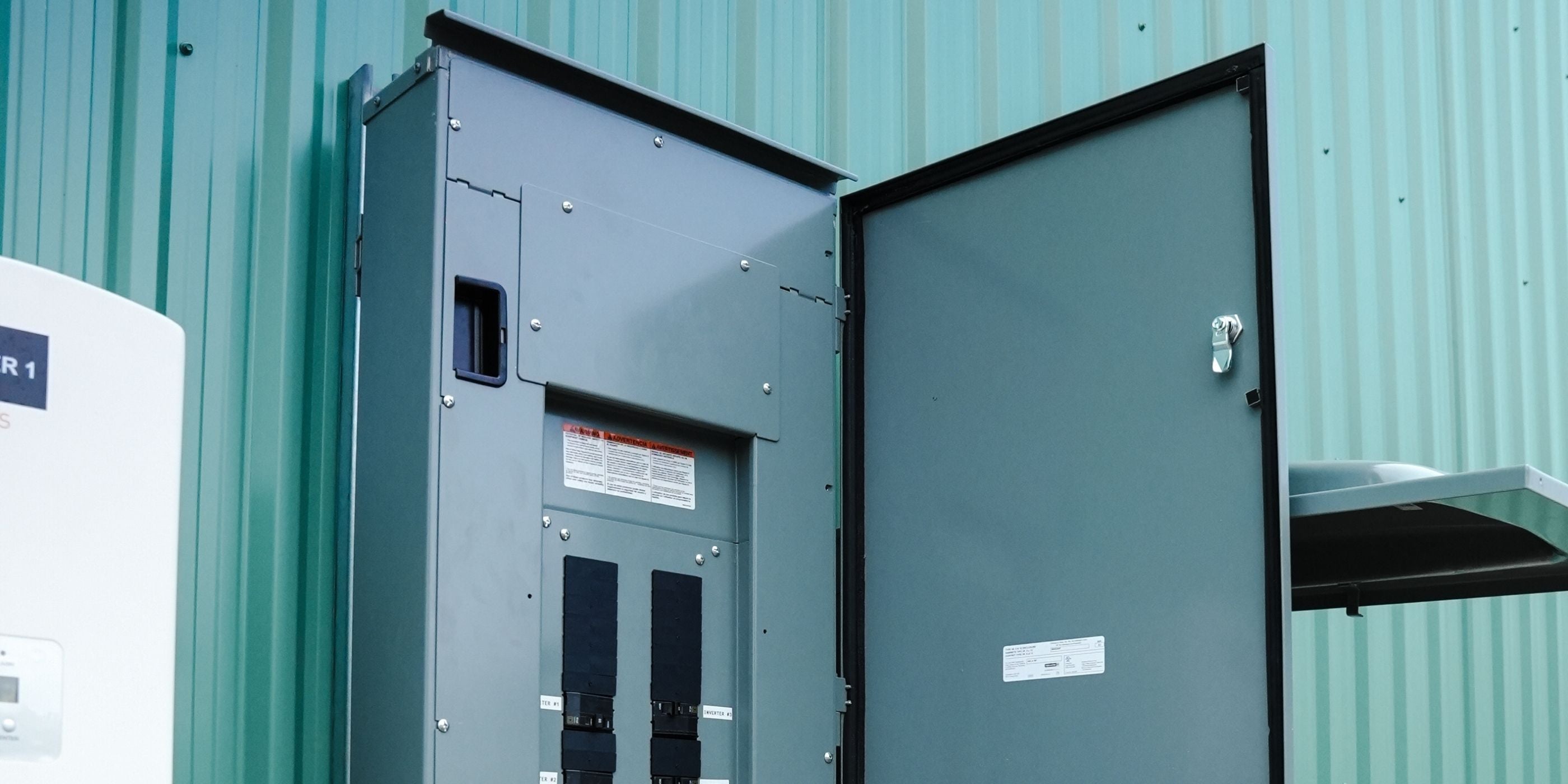
Photos from the report show clean integration on barn rooftops with centralized inverter locations for fast service and monitoring.
One of the biggest hurdles Ken encounters isn’t technical, it’s psychological: “I think many people are afraid of getting caught in a new technology and then finding out it doesn't work. The thing is, this isn't new technology, there are systems running over 30 years that are still producing at or above their specs. We can quite accurately predict what the systems will produce and the maintenance they require to run.”

Policy & Rebates: Why Now Is the Time
Ken cautions that incentives can change, but current conditions strongly favor action: “It's hard to say what will happen with rebates in the future, but they are quite good now, allowing farms to have payback between 5-10 years depending on the system.”
The case study emphasizes that as of October 2025:
-
Both Federal and Ontario programs offer attractive incentives for solar
-
The Ontario Electricity Rebate is increasing from 13.1% → 23.5% to offset upcoming rate spikes
Solar simultaneously fights:
-
Rising energy costs (Historically they have risen an average of 10% per year.)
-
Rising regulatory charges
-
Higher demand due to technology & automation on dairy farms
Good Read: If you’re a homeowner in Southwestern Ontario, we’ve created a guide to help you determine whether solar is right for your home.
Why Expansion Plans Make Solar Even More Valuable
This farm’s electricity consumption is currently lower than solar generation due to future herd and equipment expansion. When fully utilized:
-
Credits are applied strategically during winter
-
Savings increase
-
ROI accelerates
Solar provides long-term planning capability, and power costs become predictable.
What’s Next
Solar for dairy farms in Ontario is no longer a gamble; it’s a proven, regulated, financially strong, and environmentally beneficial investment.
As electricity prices climb, every year without solar, farms lose money they could be saving.
This dairy project is just one example.
Toews Power has delivered multiple net-metered agricultural and commercial solar installations across Ontario, including the Dotzert Solar Energy project and the Science Hill Poultry solar project.
Looking ahead, Ken believes the conversation around solar has fundamentally shifted: “I don’t think the question anymore is whether farms will install solar…it’s when. I find people are enthusiastic about integrating solar into their farm if it’s a financially sound decision.”
Ready to Cut Your Hydro Costs and Save More?
Toews Power specializes in agricultural solar solutions engineered for Ontario conditions.
Book a free solar assessment and quote today and see exactly how much your business could save.
FAQs for Ontario Farmers Considering Solar
Q1 Will solar still work in the winter?
Yes. Snow impacts production temporarily, but credits from summer exports offset winter usage under net metering.
Q2 What roofs work best?
Barn and parlor roofs with good structural condition, south-facing pitch, and no shading.
Q3 What if I expand my electrical load later?
Systems can be sized for current or future demand. Unused credits roll forward for 12 months.
Q4 How are savings tracked?
Monthly Hydro One bills show credits applied, just like in this case study.
Q5 What is maintenance like?
Almost zero. Occasional inverter checks and monitoring app alerts ensure ongoing health.
Q6 Does hail or wind damage solar?
Panels are rated for harsh Canadian conditions. Many survive tornado-level winds.
Q7 Are there grants or tax write-offs?
Yes. Federal rebate programs, accelerated depreciation, and provincial incentives vary year-to-year.